
Electric three-wheelers are becoming more capable, affordable and practical.
But in many markets, one question still stops buyers before they reach the showroom:
"Is this vehicle actually legal to use?"
That question may decide the speed of adoption more than many people expect.
Colombia just sent a market signal
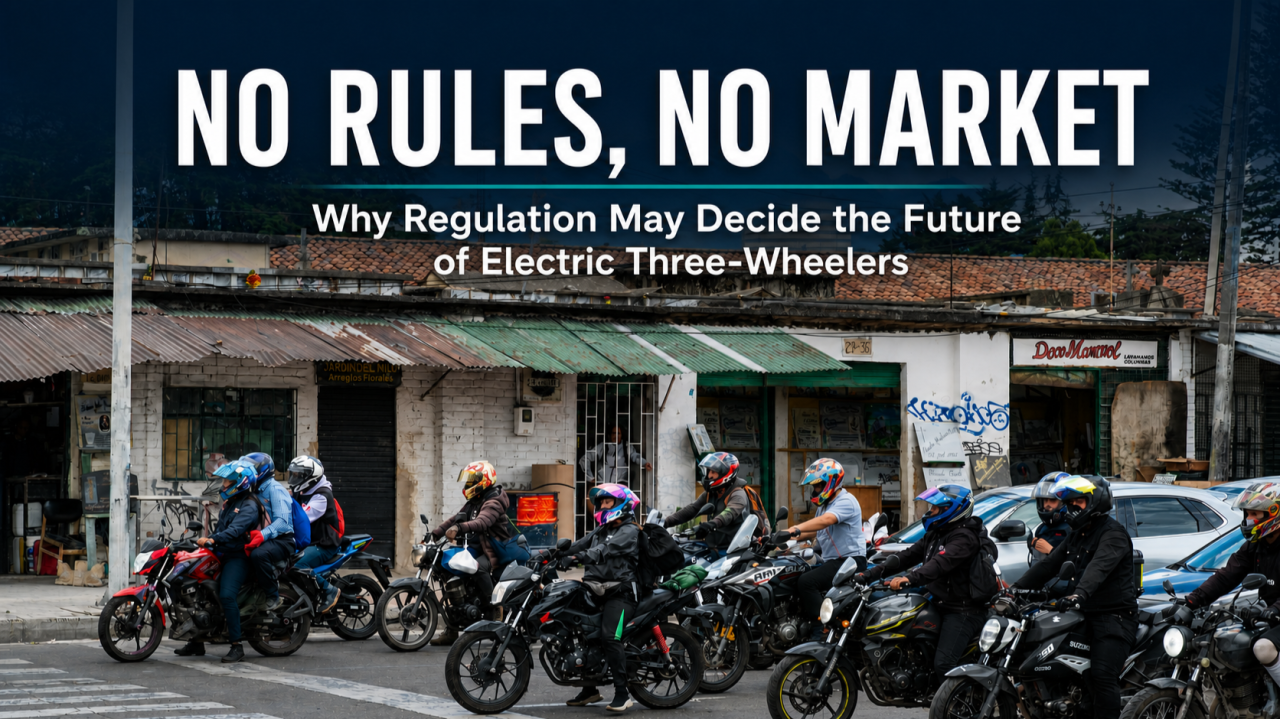
In August 2026, Colombia introduced its first national classification framework for light electric mobility vehicles, explicitly including electric tricycles.
That may sound like a technical policy update, but for the electric three-wheeler industry it is an important signal.
Why?
Because electric three-wheelers often sit in a grey area between motorcycles, small passenger vehicles, cargo vehicles and micromobility devices. When the category is unclear, the market becomes unclear too.
The problem is the grey area
In many countries, electric three-wheelers already attract real interest.
They are useful for passenger transport, community mobility, tourism, last-mile movement, campuses, resorts, factories and local distribution.
But buyers, dealers and importers often face the same practical questions:
- Does the vehicle need registration?
- What licence is required to operate it?
- Can it be used on public roads?
- Does it need insurance?
- Which technical standard applies?
- Is it treated as a motorcycle, a low-speed vehicle or something else?
When those answers are unclear, the market becomes hesitant.
Consumers hesitate.
Dealers hesitate.
Importers hesitate.
Financing companies and insurers hesitate.
That uncertainty slows adoption even when the product itself is good.
Regulation is not always the enemy of innovation
In new mobility sectors, regulation is often seen as a burden. Sometimes it is.
But no regulation can be just as damaging.
A clear legal framework can give buyers confidence. It can help dealers explain products properly. It can allow importers to plan long-term. It can give insurers and finance providers a basis to participate.
Most importantly, it tells the market:
"This vehicle category exists."
That recognition matters.
For electric three-wheelers, especially passenger and leisure-oriented models, legal clarity may become one of the most important foundations for growth.
The market needs more than better technology
Battery range matters.
Motor performance matters.
Comfort, safety, price and after-sales support all matter.
But if a vehicle cannot be clearly registered, insured, financed or legally operated, technical advantages alone may not be enough.
That is why the next stage of electric three-wheeler growth will not only depend on manufacturers. It will also depend on governments, regulators, importers, distributors and local industry groups working out the rules of the market.
Clear vehicle categories.
Clear road-use rules.
Clear safety standards.
Clear responsibilities for operators and owners.
Those things may sound less exciting than battery technology, but they can create something just as important:
The trust of the market.
Electric three-wheelers do not only need better technology.
They need a clear legal identity.
And countries that define that identity earlier may create stronger opportunities for electric three-wheeler adoption in the years ahead.
Originally published on LinkedIn: No Rules, No Market: Why Regulation May Decide the Future of Electric Three-Wheelers
Cover photo by Reza Madani on Unsplash.
